
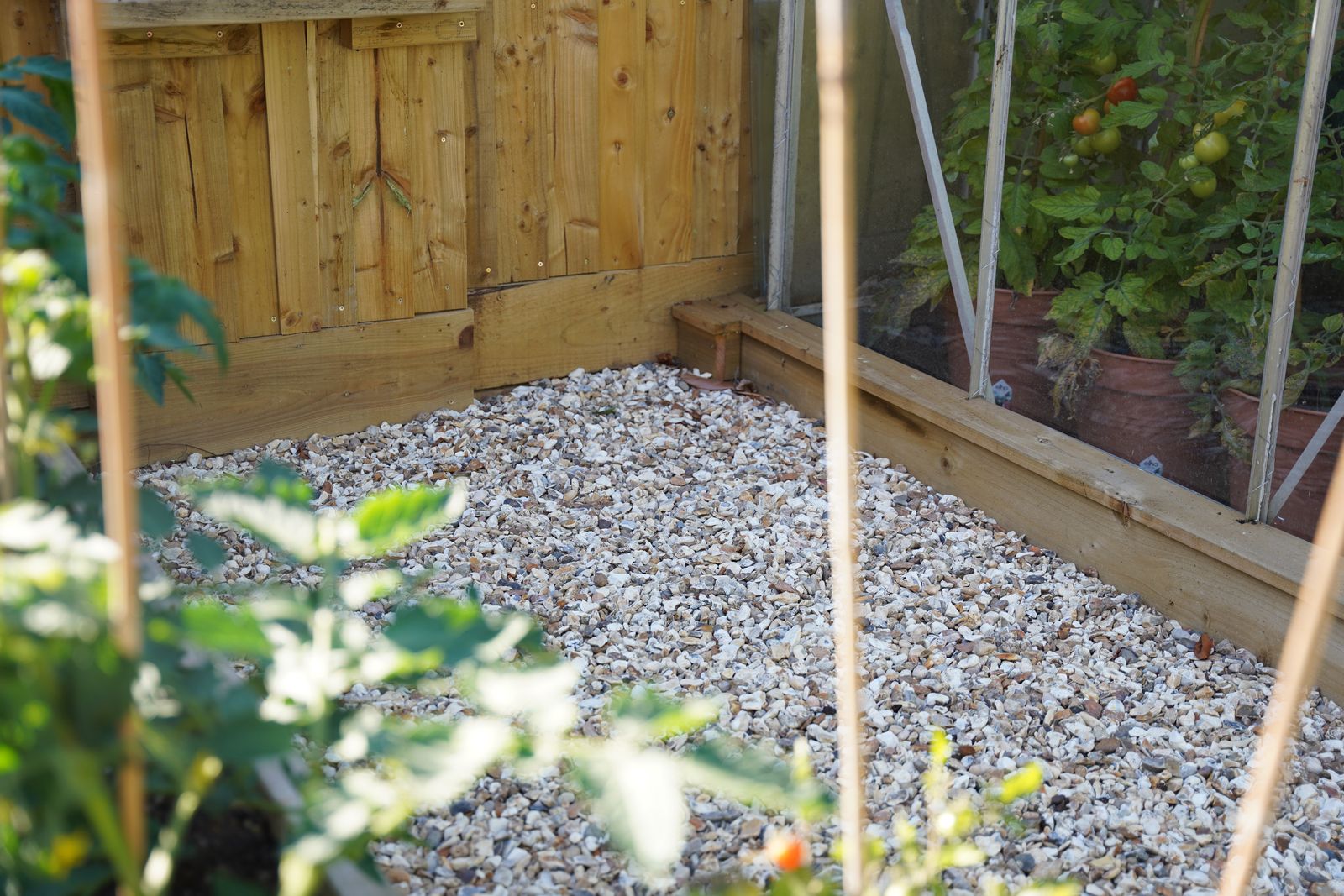
Sandstone · Wiltshire
Innox Park · 42m² patio
Kandla grey sandstone, channel drain to soakaway, low brick walls to two sides.
Indian sandstone, porcelain, block paving, brick walls, dry stone, retaining walls, drainage. The hard landscaping that turns a garden from passable to spectacular.
The cheap end of patio/driveway work is everywhere. Slabs laid on a thin bed of sand, dropped onto an unconsolidated subgrade, with no drainage falls. They look fine for two years and then start sinking, cracking and growing weeds.
We do the unsexy bits properly: 150mm Type 1 sub-base, compacted in 50mm layers, falls planned to drainage from day one. The slab on top is the easy bit.
Most popular patio material in Wiltshire. Natural stone with colour variation (Kandla grey, Raj green, mint, autumn brown). Develops a softened patina over time. Cheaper than porcelain but needs sealing every 3–5 years to keep colour.
Engineered tile. Uniform colour, virtually stain-proof, frost-proof, no sealing needed. More expensive than sandstone, harder to cut on site, but stays looking new for decades. Best for contemporary designs.
Standard for driveways. Tough enough to drive on, repairable (you can lift one block to replace it), wide colour range. Modern permeable blocks let surface water soak through — solves the planning issue for new front drives.
For garden walls we work in brick, dressed stone, dry stone (Cotswold limestone or local Bath stone reclaimed) and rendered concrete block. Always with proper foundations (450–600mm trench depth), proper coursing and a coping that throws water clear.
Lower-maintenance alternative to softwood decking. Won't rot, splinter or fade. Higher upfront cost but lower lifetime cost.
Bad drainage is why patios and driveways fail. We always design with falls (1:80 minimum) toward channel drains or soakaways, and we never seal a patio against the house wall without a proper damp-proof gap or perimeter drain.
Sloping gardens around Bath, Bradford-on-Avon and the southern Wiltshire valleys often need retaining walls. The two non-negotiables:
Walls over 1.2m typically benefit from structural engineer input — we'll flag this at quote stage.
Kandla grey sandstone, channel drain to soakaway, low brick walls to two sides.
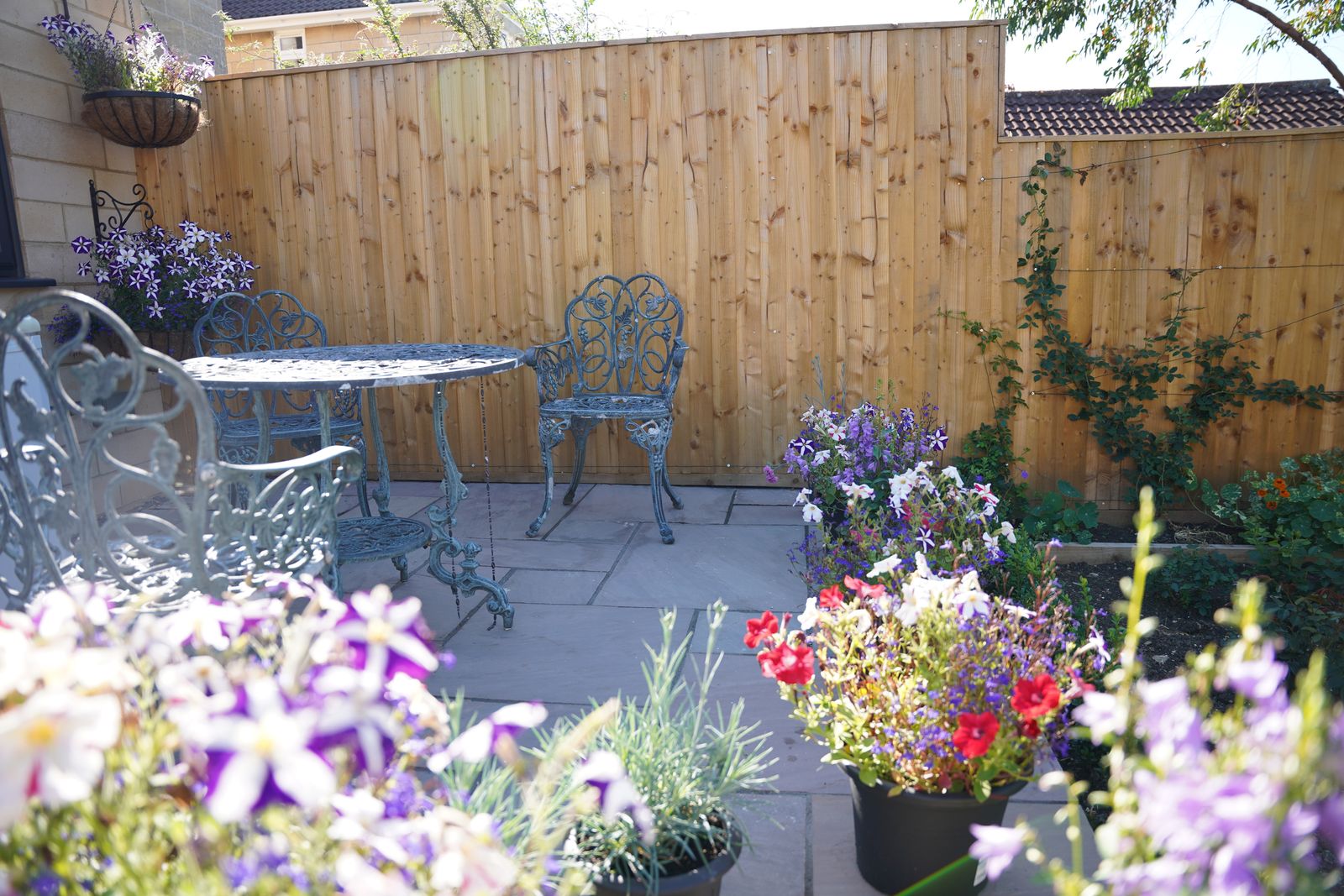
Permeable block paving, dropped kerb, full Type 1 base. Two-car drive.
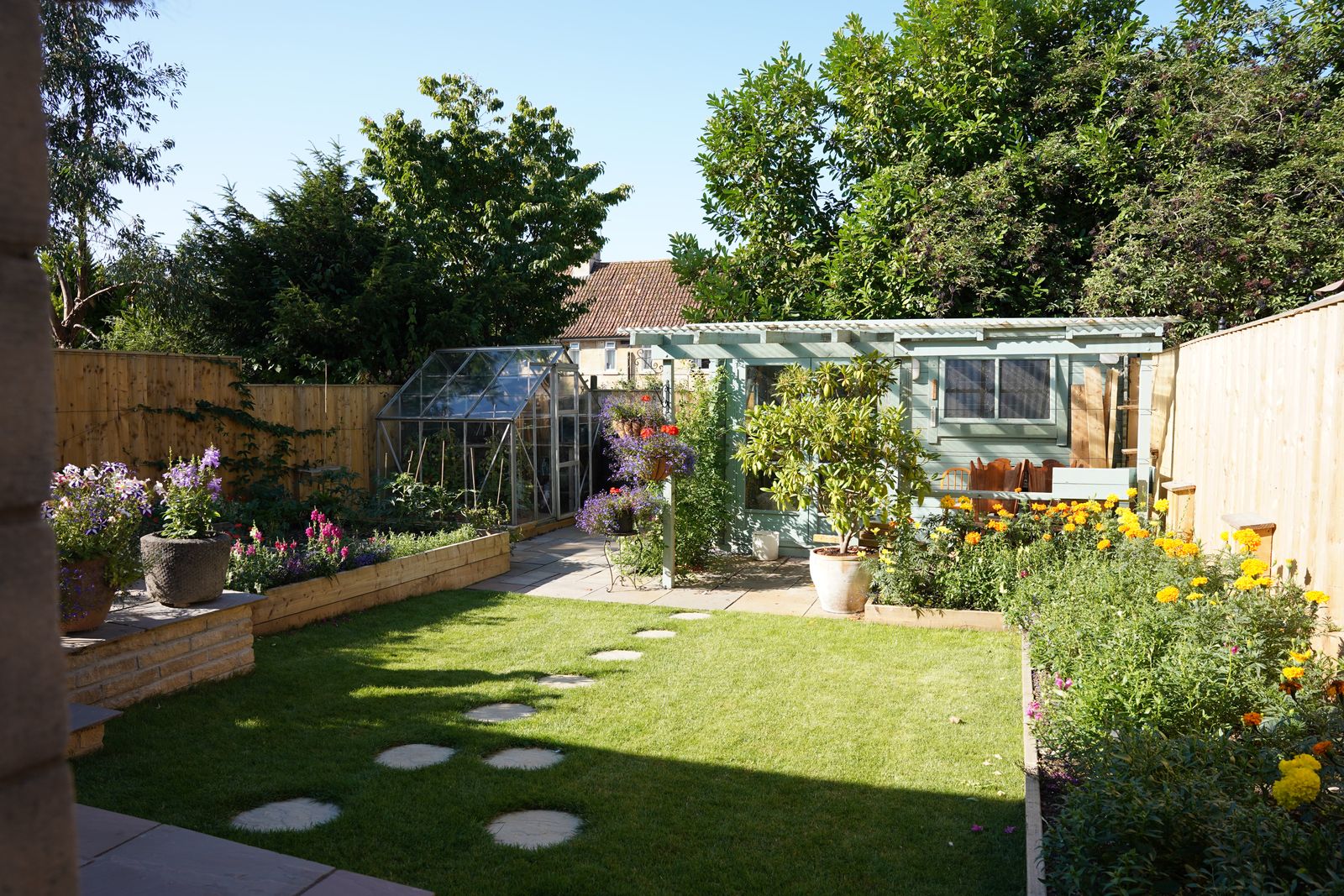
Bath stone-faced retaining wall on a steep terraced garden, full perimeter drainage.
Both excellent. Sandstone is cheaper, natural colour variation, develops patina. Porcelain is more expensive, uniform, virtually stain-proof. Contemporary clean look — porcelain. Softer cottage feel — sandstone.
Patios at the back — normally PD. Front driveways need planning if non-permeable materials and area exceeds 5m²; permeable paving avoids this. Walls over 1m on public-facing boundary need planning, walls over 2m anywhere.
Bad drainage is why most patios and driveways fail within 5 years. We design falls toward channel drains or soakaways, and never seal a patio against the house wall without proper protection. Drainage often costs more than the slabs.
Yes — common across Bath especially. Concrete block faced in stone, or solid stone. Walls over 1.2m typically need engineering input. Drainage behind the wall is critical.
30–50m² patio typically 7–14 days. Block-paved driveways of similar size 10–18 days. Retaining walls add days based on length and height.
Book a site visit and we'll bring sample slabs and boards out to you, so you can see them against your own house and garden.